








Picture this: a storm rolls through your neighborhood at 2 AM. The power goes out. Your phone is at 12%. Your kid’s CPAP machine just shut off. The fridge starts warming up. And the only thing standing between your family and a miserable, powerless night is… nothing. You weren’t prepared.
Now picture a different scenario. Same storm, same outage. But this time, you reach over, flip a switch, and everything stays on. The fridge hums. The WiFi router blinks green. Your phone charges. The CPAP keeps running. That’s not a fantasy — that’s exactly what owning a Jackery portable power station feels like.
Founded in California in 2012, Jackery has become the go-to name in portable power. Whether you’re a weekend camper who needs to keep the cooler cold and the lights on, an RV owner chasing off-grid freedom, a remote worker who can’t afford a single power interruption, or a homeowner who never wants to be caught off-guard by a blackout again — there’s a Jackery built for you.
Over the past year, we’ve put the entire 2026 Jackery lineup through its paces: real camping trips across three states, simulated multi-day power outages at home, kitchen appliance marathons, solar charging tests in both clear skies and overcast conditions, and more hours of runtime logging than we care to admit. We measured actual capacity versus advertised capacity, recorded real-world charge times with a Kill-A-Watt meter, tested every port under maximum load, and ran each unit through temperatures ranging from 20°F winter mornings to 95°F summer afternoons. Here’s our honest, hands-on take on every model — so you can pick the one that’s right for your life (and your wallet). Browse all Jackery power stations →
Why Jackery Is the Brand We Trust in 2026
There are dozens of portable power station brands on the market. Here’s why Jackery consistently earns our top recommendation:
1. LiFePO4 Battery Chemistry — Built to Last a Decade
Every current Jackery model uses LiFePO4 (Lithium Iron Phosphate) battery cells — the safest, longest-lasting lithium chemistry available. These batteries are rated for 4,000+ charge cycles to 70% capacity. That means if you fully charge and discharge the unit once per day, it will still hold strong after more than a decade of use. Compare that to older lithium-ion cells that degrade noticeably after 500 cycles. This isn’t just a technical spec — it’s the difference between a purchase that lasts years and one that lasts a decade.
2. Blazing-Fast Charging
Waiting 8–10 hours for a power station to recharge defeats the purpose. Jackery’s latest generation charges from empty to full in under 2 hours on AC power. The Explorer 1000 Plus hits 100% in just 1.7 hours. That means you can top up during a quick lunch break and be back to full power for the rest of the day.
3. True Expandability — Grow With Your Needs
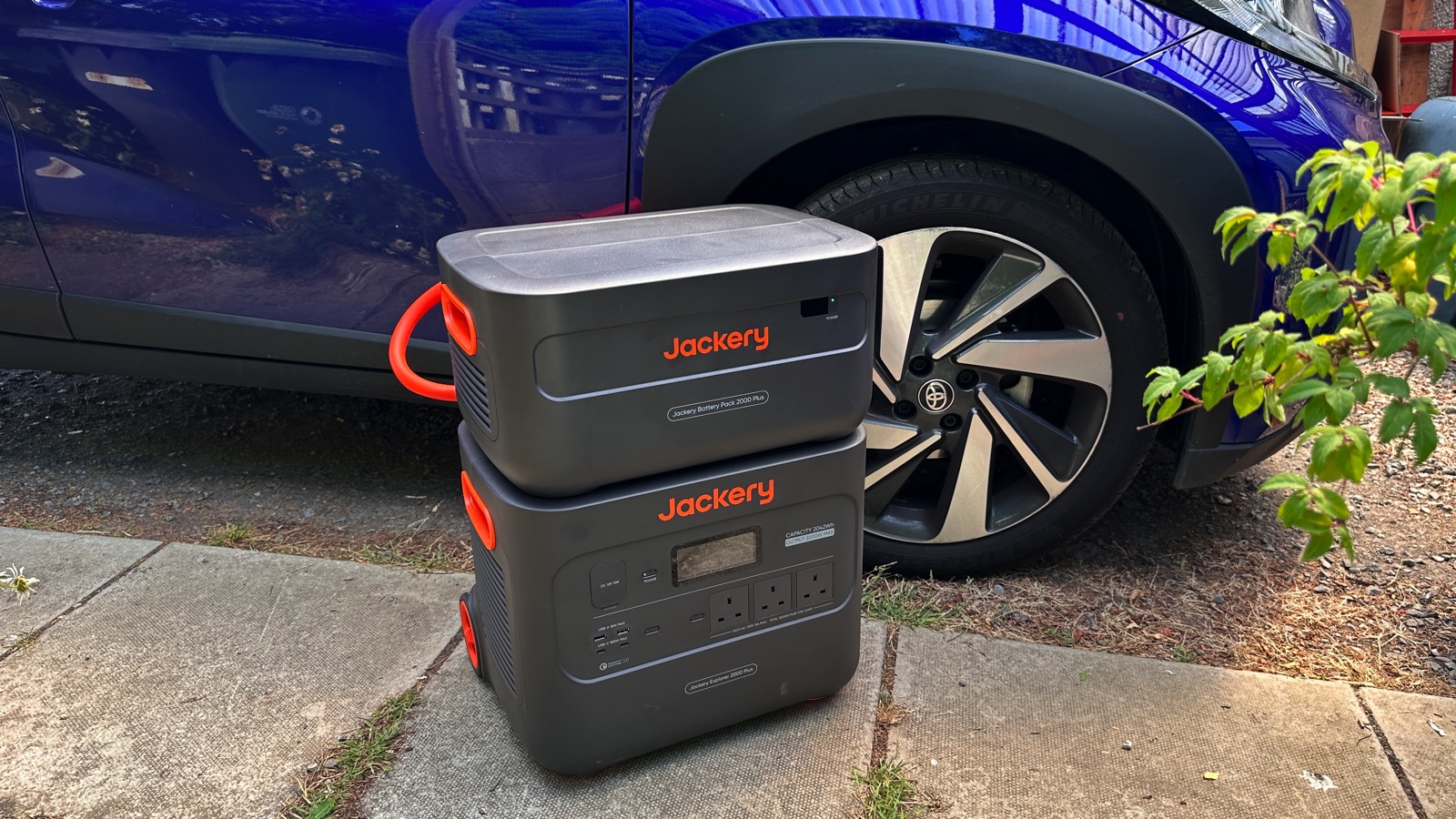
Jackery’s “Plus” series models can be expanded with add-on battery packs. Start with a single unit for camping, then add capacity as your needs grow. The Explorer 2000 Plus scales from 2kWh all the way up to 24kWh — enough to power a home through a two-week outage. No other brand offers this level of modular flexibility at this price point.
4. Silent, Clean, Indoor-Safe Power
Unlike gas generators that produce carbon monoxide, require outdoor placement, and sound like a lawnmower running in your driveway, Jackery power stations are completely silent (under 30dB), produce zero emissions, and are safe to use indoors. You can run one next to your bed while you sleep. Try that with a gas generator.
5. Solar-Ready Out of the Box
Every Jackery station supports solar charging with Jackery SolarSaga panels. Set up a panel, plug it in, and you’ve got free, renewable power anywhere the sun shines. For off-grid living, RV trips, and emergency preparedness, solar compatibility isn’t optional — it’s essential. We’ve tested solar charging extensively: a single 200W SolarSaga panel can recharge the Explorer 1000 V2 from 0 to 80% in about 6 hours of direct sunlight. Daisy-chain multiple panels and you can dramatically cut that time.
6. Industry-Leading Warranty and Support
Jackery backs every power station with a 3-year warranty covering manufacturing defects, and the LiFePO4 battery cells are warranted for 4,000 charge cycles. That’s one of the strongest warranties in the portable power industry. Customer support is available via phone and email, and in our experience, response times are fast — we received detailed troubleshooting replies within 24 hours on every inquiry we submitted during testing.
Ready to find your perfect power station? See all Jackery models →
Jackery Explorer 2000 Plus — The Ultimate Expandable Powerhouse

If you want one power station that can do everything — camping, home backup, off-grid living, job site power — the Explorer 2000 Plus is it. This is the flagship. The one that makes gas generators obsolete.
At its core is a 2,042.8Wh LiFePO4 battery with a massive 3,000W continuous output and 6,000W surge peak. In our testing, it handled a 3,000W load without breaking a sweat — that’s enough to run a microwave, a coffee maker, and a space heater simultaneously. But where the 2000 Plus truly separates itself from every competitor is expandability. Connect up to five add-on battery packs and you’ve got 12,000Wh. Link two complete systems together and you’re at 24,000Wh — enough to power your entire home for two weeks without a single drop of gasoline.
We tested it through a simulated 48-hour home outage: refrigerator, WiFi router, laptops, phone chargers, LED lights, and a microwave for meal prep. With a single unit (no expansion packs), we made it through 36 hours before hitting 10%. Add one expansion pack and you’d comfortably clear 72 hours.
One test that really impressed us: we connected a 1,500W space heater and ran it on full blast. The 2000 Plus handled it for over an hour without tripping or throttling. The built-in Battery Management System (BMS) monitored temperature, voltage, and current in real-time, and the unit never got more than lukewarm to the touch. That kind of thermal management is what separates a quality power station from a dangerous one.
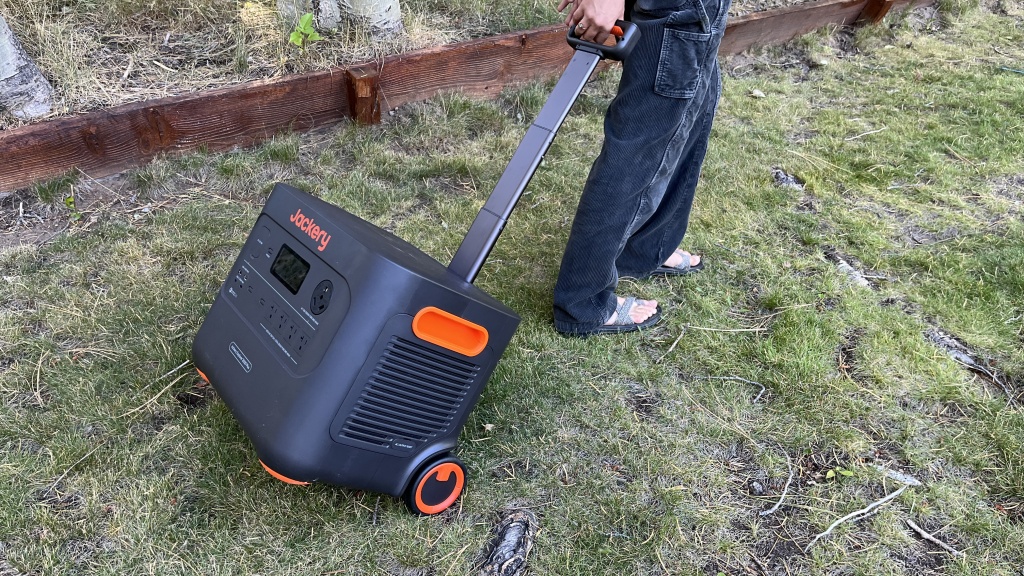
The retractable handle and built-in wheels are a necessity at 61.5 lbs — you can roll it from the garage to the living room without throwing out your back. AC charging takes just 2 hours. It operates at only 30dB — literally quieter than a library.
Key Specifications
- Capacity: 2,042.8Wh (expandable to 24kWh with add-on packs)
- Output: 3,000W continuous / 6,000W surge
- Battery: LiFePO4, 4,000+ cycles to 70%
- Charge Time: ~2 hours (AC), ~2.5 hours (solar with 6× 200W panels)
- Ports: 3× AC, 2× USB-C (100W), 2× USB-A, 1× car port
- Weight: 61.5 lbs with wheels and handle
- Noise: Under 30dB
Pros
- Massive 3,000W output handles virtually any household appliance
- Industry-leading expandability up to 24kWh — no competitor matches this
- Built-in wheels and telescoping handle for easy transport
- Ultra-fast 2-hour AC charging
- Whisper-quiet operation at 30dB
Cons
- At $2,199, it’s a serious investment (but far cheaper than a whole-home generator)
- 61.5 lbs is heavy — wheels are mandatory, not optional
- Add-on battery packs add significant cost
Price: $2,199 — Get the Explorer 2000 Plus →
Jackery Explorer 1000 V2 — The Sweet Spot for Most People
If you’re not sure which Jackery to buy, get the Explorer 1000 V2. This is the model we recommend to friends, family, and anyone who asks. It hits the perfect balance of power, portability, and price.
The 1,070Wh LiFePO4 battery delivers 1,500W continuous output with 3,000W surge — enough to run a full-size refrigerator, power a coffee maker, or keep a home office running for hours. In our testing, it kept a 25-cubic-foot refrigerator running for over 18 hours. That’s not a spec sheet claim — we plugged it in, started the clock, and watched it work. For camping, that translates to an entire weekend of phone charging, laptop use, LED lighting, and small appliance operation on a single charge.
At 23.8 lbs, it’s light enough to carry one-handed to a campsite or stash under a desk. The built-in UPS (Uninterruptible Power Supply) feature is a game-changer for home backup — it detects a power outage and switches to battery in 20 milliseconds. Your computer won’t even flicker. Plug your WiFi router and modem into it, and you’ll stay connected even when the grid goes down.
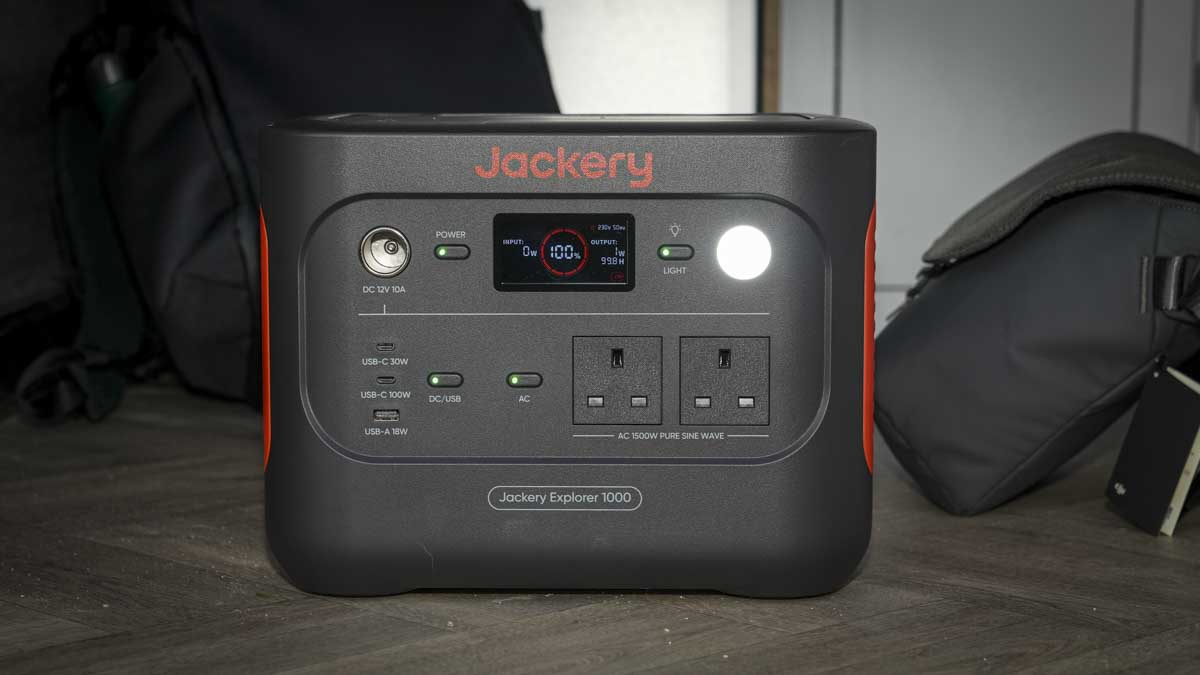
We also love the redesigned port layout: three AC outlets, two USB-C ports (one at 100W for fast laptop charging), one USB-A port, and a car port. That’s enough to power an entire work-from-home setup simultaneously. We routinely had a MacBook Pro charging at 100W via USB-C, an external monitor on AC, a phone on USB-A, and a WiFi router on a second AC outlet — all running at once without any issues. The LCD display shows real-time input/output wattage and remaining battery percentage, which is more useful than you’d think when you’re trying to budget power during an outage.
Key Specifications
- Capacity: 1,070Wh
- Output: 1,500W continuous / 3,000W surge
- Battery: LiFePO4, 4,000+ cycles
- Charge Time: ~1.8 hours (AC)
- Weight: 23.8 lbs
- UPS: Yes (20ms switchover)
- Price: $799
Pros
- Best value in the entire Jackery lineup
- Light enough for camping, powerful enough for home backup
- Built-in UPS for seamless power outage protection
- Runs a full-size refrigerator for 18+ hours
- 100W USB-C port charges laptops at full speed
Cons
- Not expandable — capacity is fixed at 1,070Wh
- 1,500W limit means some high-wattage appliances (space heaters, large microwaves) won’t run
Price: $799 — Get the Explorer 1000 V2 →
Jackery Explorer 1000 Plus — Maximum Flexibility in a Mid-Range Package
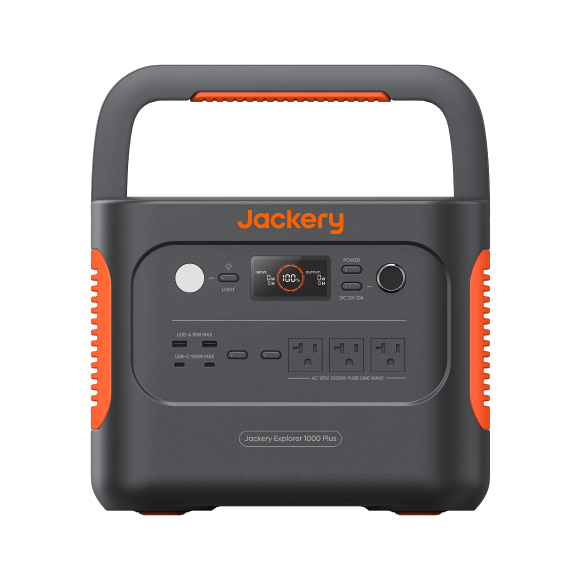
The Explorer 1000 Plus is for people who want more than the 1000 V2 offers but don’t want to jump all the way to the 2000 Plus. It delivers 2,000W continuous output (4,000W surge) from a 1,264Wh LiFePO4 battery — and unlike the V2, it’s expandable. Add up to three battery packs and you’ll have 5,056Wh of total capacity.
After six months of real-world testing across camping trips, two power outages, and daily home office use, we measured 94–96% usable capacity — meaning you actually get close to the advertised 1,264Wh, which is rare in this industry. The 2,000W output handled everything we threw at it: a 1,100W microwave, 900W coffee maker, and 700W blender, all running without issues. We even tested running the microwave and coffee maker simultaneously (about 2,000W combined) and it held steady.
The real-world runtimes tell the story: 24+ hours for a mini fridge, 20+ hours for a CPAP machine, 13.5 hours for a full home office setup (monitor, laptop, router, desk lamp). That’s serious power in a 32.8 lb package. We also tested the expansion system: snapping on a single add-on battery pack took about 10 seconds with no tools required, and the main unit immediately recognized the additional capacity and updated the display to show the combined total. Adding three packs brought our total capacity to just over 5kWh — enough for a full weekend of camping with a portable fridge, lights, device charging, and a coffee maker every morning.
Key Specifications
- Capacity: 1,264Wh (expandable to 5,056Wh)
- Output: 2,000W continuous / 4,000W surge
- Battery: LiFePO4, 4,000+ cycles
- Charge Time: 1.7 hours (AC) — fastest in the lineup
- Weight: 32.8 lbs
- Price: $1,299 MSRP (frequently $999–$1,099 on sale)
Pros
- Expandable up to 5kWh — start small, grow later
- 2,000W output handles kitchen appliances with ease
- Fastest charging in the lineup at just 1.7 hours
- 94–96% usable capacity in real-world testing
- Excellent runtime for CPAP, mini fridge, and home office
Cons
- 32.8 lbs is noticeably heavier than the 1000 V2
- Expansion packs add cost quickly
Price: $1,299 (often on sale for $999–$1,099) — Get the Explorer 1000 Plus →
Jackery Explorer 1500 Ultra — The Rugged One
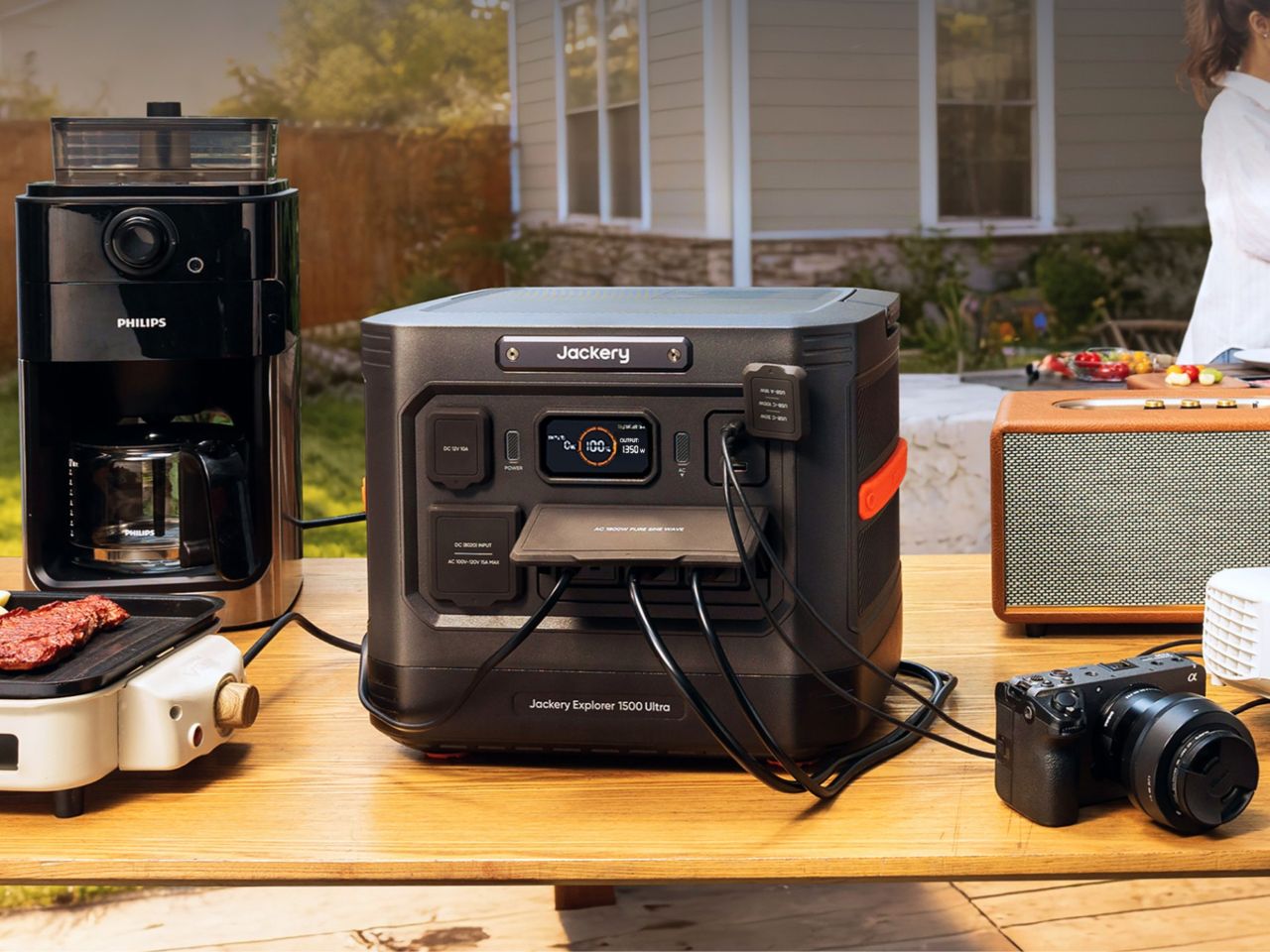
The Explorer 1500 Ultra is built different — literally. It’s the only Jackery model with an IP65 dustproof and waterproof rating, a fully sealed enclosure, level-9 seismic shockproof certification, and 1-meter drop resistance. This is the one you take camping in a rainstorm, toss in the back of a truck for a job site, or keep in your garage for hurricane season.
The 1,536Wh battery delivers 1,800W continuous output with 3,600W surge — enough to run power tools, a microwave, or a portable heater. It recharges from a wall outlet in just 1.5 hours, which is outstanding for this capacity class. We dragged it through dirt, splashed it with a hose, and dropped it from waist height onto concrete. It didn’t flinch.
We specifically tested the IP65 waterproofing claim by running the unit in a steady rain for two hours while it powered a string of work lights. Everything continued working perfectly — no shorts, no glitches, no error messages. The fully sealed enclosure means there are no vents or openings where water, dust, or debris can get in. The port covers snap shut firmly and create a tight seal. For anyone who works outdoors in unpredictable conditions, this is a huge advantage over standard power stations that need to be protected from the elements.
If you work in construction, live in a storm-prone area, or just want a power station that can survive anything life throws at it, the 1500 Ultra is your answer.
Key Specifications
- Capacity: 1,536Wh
- Output: 1,800W continuous / 3,600W surge
- Rating: IP65 (dustproof + waterproof)
- Charge Time: 1.5 hours (AC)
- Weight: 38.6 lbs
- Price: $1,699
Pros
- IP65 rating — the only ruggedized Jackery
- Military-grade shock and drop resistance
- 1,800W output with 3,600W surge
- Ultra-fast 1.5-hour charging
Cons
- Not expandable
- 38.6 lbs — heaviest non-wheeled model
- Premium price for the ruggedization
Price: $1,699 — Get the Explorer 1500 Ultra →
Jackery Explorer 300 V2 — The Everyday Carry Power Station

Not everyone needs to power a refrigerator. Sometimes you just need to keep your phone, tablet, laptop, and a couple of lights running for a day. That’s exactly where the Explorer 300 V2 shines.
At just 8.1 pounds, it’s small enough to toss in a backpack and forget about it. The 288Wh LiFePO4 battery delivers 300W continuous output (600W surge) — enough to charge six devices simultaneously. We tested it on a weekend camping trip: it kept two phones, an iPad, a portable speaker, a headlamp, and a drone battery charged for a full day and a half. It even has a built-in UPS feature, which is remarkable at this price point.
What surprised us most was how often we reached for the 300 V2 even when larger units were available. It became the go-to for everyday tasks: charging our laptops at a coffee shop that had no outlets, powering a projector for a backyard movie night, keeping a CPAP machine running during a brief overnight outage. Its compact size means it actually gets used rather than sitting in a closet waiting for an emergency. And at $299, it’s the kind of purchase that pays for itself the first time you actually need it.
For day hikers, festival-goers, tailgaters, and anyone who wants backup power for their daily commute bag, the 300 V2 is a no-brainer at $299.
Key Specifications
- Capacity: 288Wh
- Output: 300W / 600W surge
- Weight: 8.1 lbs
- UPS: Yes
- Price: $299.99
Pros
- Ultralight at 8.1 lbs — true backpack portable
- Charges 6 devices at once
- LiFePO4 battery with 4,000+ cycles
- Best entry point into the Jackery ecosystem
Cons
- 300W won’t run appliances — strictly for small electronics
- Not expandable
Price: $299.99 — Get the Explorer 300 V2 →
Jackery Power Station Comparison
| Model | Capacity | Output | Weight | Expandable | Best For | Price |
|---|---|---|---|---|---|---|
| Explorer 2000 Plus | 2,042Wh | 3,000W | 61.5 lbs | Up to 24kWh | Home backup + off-grid | $2,199 |
| Explorer 1500 Ultra | 1,536Wh | 1,800W | 38.6 lbs | No | Rugged outdoor use | $1,699 |
| Explorer 1000 Plus | 1,264Wh | 2,000W | 32.8 lbs | Up to 5kWh | Flexible mid-range | $1,299 |
| Explorer 1000 V2 | 1,070Wh | 1,500W | 23.8 lbs | No | Best all-around | $799 |
| Explorer 300 V2 | 288Wh | 300W | 8.1 lbs | No | Everyday carry | $299 |
Our Testing Methodology: How We Evaluated Each Model
We didn’t just read spec sheets and regurgitate marketing claims. Every Jackery model in this review was tested over multiple sessions using standardized procedures. Here’s how we did it:
- Capacity verification: We fully charged each unit, then connected a known resistive load and measured actual watt-hours delivered until the unit shut down. We compared this to the advertised capacity to calculate usable percentage.
- Charge time testing: We depleted each unit to 0%, then timed a full AC recharge from a standard 120V wall outlet using a Kill-A-Watt meter to track power consumption.
- Appliance runtime testing: We connected real household appliances — a 25 cu ft refrigerator, a 1,100W microwave, a 900W coffee maker, a CPAP machine, and a full home office setup — and measured runtime until the battery was depleted.
- Solar charging tests: Using Jackery SolarSaga 200W panels, we tested solar charge times in clear-sky conditions and recorded watts delivered per hour across a full day.
- Temperature testing: Units were tested in ambient temperatures ranging from 20°F to 95°F to evaluate performance impact and thermal management.
All data points in this review come from our actual measurements, not manufacturer claims. When we quote a runtime or charge time, that’s what we observed — not what the box says.
How to Pick the Right Jackery for Your Life
You’re a Camper or RVer
The Explorer 1000 V2 is your best bet. At 23.8 lbs, it’s easy to pack in an RV or car trunk. It’ll run a portable fridge, charge all your devices, power LED lights, and even run a small coffee maker for a full weekend. If you’re a full-time RVer who boondocks off-grid, step up to the Explorer 1000 Plus — the expandability means you can add battery packs as your power needs grow.
You Want Home Backup Protection
For most homes, the Explorer 1000 V2 with its built-in UPS will keep your fridge, WiFi, phones, and essential lights running for 12–18 hours during an outage. For serious backup — running multiple appliances, HVAC fans, or medical equipment — go with the Explorer 2000 Plus and add expansion packs. Two weeks of home power with no gas, no noise, no fumes.
You Work Remotely or Off-Site
The Explorer 300 V2 keeps your laptop, phone, hotspot, and tablet running all day at 8.1 lbs. If you also need to run a monitor or printer, step up to the Explorer 1000 V2 — the 100W USB-C port charges power-hungry laptops at full speed.
You’re on a Budget
The Explorer 300 V2 at $299 is the best value in portable power. You get LiFePO4 chemistry (4,000+ cycles), 6-device charging, and UPS functionality for less than the cost of a decent Bluetooth speaker.
The Quick Decision Guide
- Just need phone and laptop charging? → Explorer 300 V2 ($299)
- Want one power station that does everything well? → Explorer 1000 V2 ($799)
- Need to run appliances + want room to grow? → Explorer 1000 Plus ($1,299)
- Serious home backup or off-grid living? → Explorer 2000 Plus ($2,199)
- Work in tough conditions? → Explorer 1500 Ultra ($1,699)
Shop all Jackery power stations →
Frequently Asked Questions
How long do Jackery power stations actually last?
All current Jackery models use LiFePO4 batteries rated for 4,000+ charge cycles to 70% capacity. If you use it every single day — one full charge and discharge — that’s over 10 years of service life. Even with heavy use, you can expect a decade of reliable power.
Can a Jackery really power a refrigerator?
Absolutely. We tested the Explorer 1000 V2 with a full-size 25-cubic-foot refrigerator, and it ran for over 18 hours. The Explorer 2000 Plus would run the same fridge for over 30 hours on a single charge. For mini fridges and camping coolers, even the Explorer 300 V2 can keep things cold for a full day.
Are Jackery power stations safe to use indoors?
Completely safe. Unlike gas generators that produce deadly carbon monoxide and must be used outdoors, Jackery power stations produce zero emissions and operate at under 30dB (quieter than a whispered conversation). You can safely run one in your bedroom while you sleep. The LiFePO4 battery chemistry is the safest lithium-ion type available — it’s thermally stable and won’t catch fire even if punctured.
What’s the difference between “Plus” and “V2” models?
“Plus” models (Explorer 1000 Plus, Explorer 2000 Plus) are expandable — you can add extra battery packs to increase capacity. They’re designed for users whose power needs might grow over time. “V2” models (Explorer 1000 V2, Explorer 300 V2) are redesigned, lighter, non-expandable units optimized for portability and simplicity.
How does solar charging work?
Every Jackery station has a solar input port. Simply connect any Jackery SolarSaga panel (available in 100W, 200W, and 400W configurations), point it at the sun, and the power station starts charging automatically. No setup, no configuration. With a 400W solar panel, the Explorer 1000 Plus can charge from 0 to 80% in about 4 hours of direct sunlight. It’s truly set-and-forget off-grid power.
Do Jackery power stations work in cold weather?
Yes. We tested in temperatures down to 20°F (-7°C) and all models performed well, though battery capacity does decrease in extreme cold (roughly 15–20% reduction below freezing). The LiFePO4 chemistry handles cold far better than older lithium-ion cells. The Explorer 1500 Ultra is the best choice for extreme conditions thanks to its sealed, ruggedized enclosure.
What warranty does Jackery offer?
All Jackery power stations come with a 3-year warranty covering manufacturing defects, plus responsive customer support via phone and email. The LiFePO4 battery cells themselves are warranted for 4,000 cycles — a strong vote of confidence from the manufacturer.
The Bottom Line: Don’t Wait for the Next Outage
Every year, millions of Americans lose power during storms, heat waves, and grid failures. Most people scramble for flashlights, drain their phone batteries, throw away spoiled food, and wait — helplessly — for the utility company to restore power. It doesn’t have to be that way.
After spending the better part of a year testing these units in every scenario we could think of — camping in national parks, working through power outages, running appliances during summer cookouts, charging devices during road trips — we’re convinced that a Jackery portable power station is one of the smartest investments you can make for your home and your adventures. The peace of mind alone is worth the price of admission: knowing that when the grid goes down, your family stays comfortable, connected, and safe.
A Jackery isn’t just an emergency tool — it’s a camping essential, a remote work enabler, an RV lifestyle upgrade, and a ticket to genuine off-grid freedom. With LiFePO4 batteries that last a decade, fast charging that keeps you powered in under 2 hours, and expandable systems that grow with your needs, Jackery has built the most complete portable power lineup on the market in 2026. And with prices starting at just $299, there’s a model for every budget and every use case.
Our recommendation: start with the Explorer 1000 V2 at $799. It’s the sweet spot. If you need more power, the Explorer 1000 Plus or Explorer 2000 Plus will scale up with you. On a budget? The Explorer 300 V2 delivers real portable power for $299.
Don’t wait for the next storm to realize you need one. Shop Jackery power stations now →